
Orders from adults aged 20 and over.
Flat ฿60. Bangkok orders arrive next day.
Not for human or veterinary use.
Updated 9 November 2026
What is the GLOW blend?
Short answer: GLOW is a research blend of three peptides in one lyophilised vial: GHK-Cu, TB-500 and BPC-157. By weight it is mostly GHK-Cu, the copper-binding peptide, which is why the contents look dark blue. It is not a registered medicine in Thailand, and two of its three components are on the World Anti-Doping Agency's prohibited list.
"GLOW" is a market name, not a scientific one. It grew out of the skin and cosmetic research community, where GHK-Cu is the best-known peptide, and adds two compounds usually associated with tissue repair research. Blends like this exist mainly for convenience: one vial and one label instead of three.
The colour is worth understanding. GHK-Cu carries a copper(II) ion, and copper complexes of this kind are blue. A GLOW vial that looks deep blue is consistent with a GHK-Cu-heavy blend; a white powder sold as GLOW should prompt questions.
Glow
The three components
- GHK-Cu. A tripeptide (glycine-histidine-lysine) bound to copper. GHK occurs naturally in human plasma, saliva and urine, and its level in plasma has been reported to fall with age. It is also a common ingredient in topical skincare.
- TB-500. A synthetic version of thymosin beta-4, or a fragment of it. Thymosin beta-4 is a small protein that binds actin, the structural protein cells use to move and change shape. Our TB-500 guide covers it in detail.
- BPC-157. A 15-amino-acid peptide derived from a protein found in gastric juice. It has been studied mostly in rodent models of tendon, muscle and gut lining injury.
Each of these has its own research literature. They were studied separately, by different groups, for different reasons.
Glow
What the research does and does not show
This is the most important point about any blend: there is no published research on GLOW as a combination. Every finding below comes from studies of a single component. Nobody has published data on how the three behave together in one vial, whether they interact, or whether the mix differs from its parts.
What exists for the individual components:
- GHK-Cu has been studied in cell culture, animal wound models and cosmetic skin studies. Lab work has reported effects on collagen and other skin matrix proteins, and gene-expression analyses have linked GHK to changes in large numbers of human genes. Much of the summary literature comes from a small number of research groups.
- Thymosin beta-4 has been studied in cells and animals for cell migration, wound and cardiac models, with small human trials of eye drops for corneal conditions.
- BPC-157 has an extensive rodent literature, largely from one group in Zagreb, and very little human data.
The honest evidence level: early-stage, mostly preclinical for each part, and absent for the combination.
Glow
Is the GLOW blend legal in Thailand?
None of the three components is registered with the Thai FDA as a medicine, so GLOW cannot lawfully be sold or advertised as one. GHK-Cu appears in cosmetics, but a research vial is a different product category. First Amino sells GLOW only as research material, to adults aged 20 and over who accept our research-use terms and disclaimer. This is general information, not legal advice.
For sport, the blend is a problem. WADA lists thymosin beta-4 and its derivatives, including TB-500, under section S2, and BPC-157 under section S0. Anything containing either is prohibited in and out of competition, so GLOW is off limits for anyone subject to anti-doping rules.
Glow
GLOW, GHK-Cu and KLOW compared
GLOW sits between plain GHK-Cu and the four-part KLOW blend.
| GHK-Cu | GLOW | KLOW | |
|---|---|---|---|
| Contents | Copper tripeptide only | GHK-Cu, TB-500, BPC-157 | GLOW plus KPV |
| Appearance | Blue powder | Dark blue powder | Dark blue powder |
| Research on the product itself | Yes, cell, animal and cosmetic studies | None as a blend | None as a blend |
| WADA | Not named on the list | Prohibited (S0, S2) | Prohibited (S0, S2) |
| First Amino | 100mg, from ฿1,090 | 70mg, from ฿2,390 | 80mg, from ฿3,390 |
For the four-part version, see the KLOW blend guide.
Glow
How GLOW is supplied and stored
First Amino supplies Glow Blend as a lyophilised (freeze-dried) powder in a sealed, labelled glass vial, 70mg. Copper peptides and the other two components are all sensitive to heat, light and moisture.
- Keep sealed vials refrigerated at 2 to 8 °C, away from light. Labs usually freeze vials meant for long storage.
- Let a cold vial warm to room temperature before opening so condensation does not form inside.
- Laboratories reconstitute lyophilised peptides with a sterile solvent such as bacteriostatic water. The solution keeps its blue colour; a change to green or brown, or cloudiness, suggests degradation.
Thai afternoon heat is hard on peptides, so plan to receive the parcel in person and refrigerate it promptly.
Glow
How to judge a GLOW supplier
Blends are harder to check than single peptides, because a seller can quietly change the ratio. Before you order:
- Third-party testing. Look for an independent report naming the blend and, ideally, each component. Our third-party test reports are published on the lab results page.
- Stated contents. The product page should list all three peptides and the total amount per vial.
- Colour. GLOW should be visibly blue. White powder sold under the name is a red flag.
- Honest claims. A seller citing "studies on GLOW" is citing something that does not exist.
- Real people. You should be able to ask questions and get a quick, specific reply.
Glow
Buying GLOW from First Amino
Glow Blend is on the GLOW product page, from ฿2,390. Prices are in Thai baht and delivery is a flat ฿60 anywhere in Thailand. Bangkok orders arrive next day, with fast shipping across Thailand. You pay by bank transfer, upload the slip at checkout, and our team confirms the order before it is packed.
First Amino stocks Aera, and every product is third-party tested; reports are listed on the lab results page. Questions reach real people through the contact page, and we reply fast. Browse all products for the single peptides.
Questions
GLOW blend: common questions
What is in the GLOW blend?
GLOW combines GHK-Cu, TB-500 and BPC-157 in one lyophilised vial. Most of the blend by weight is GHK-Cu.
Why is GLOW blue?
GHK-Cu carries a copper ion, and copper peptide complexes are blue. Because the blend is mostly GHK-Cu, the powder and solution look dark blue.
Has GLOW been studied as a blend?
No. The published research covers GHK-Cu, thymosin beta-4 and BPC-157 individually. There are no published studies on the three combined.
Is GLOW banned in sport?
Yes. It contains TB-500, listed by WADA under S2, and BPC-157, listed under S0, so it is prohibited in and out of competition.
How much does GLOW cost in Thailand at First Amino?
First Amino lists GLOW from ฿2,390, in 70mg. Delivery is a flat ฿60 and Bangkok orders arrive next day.
First Amino
In the catalogue
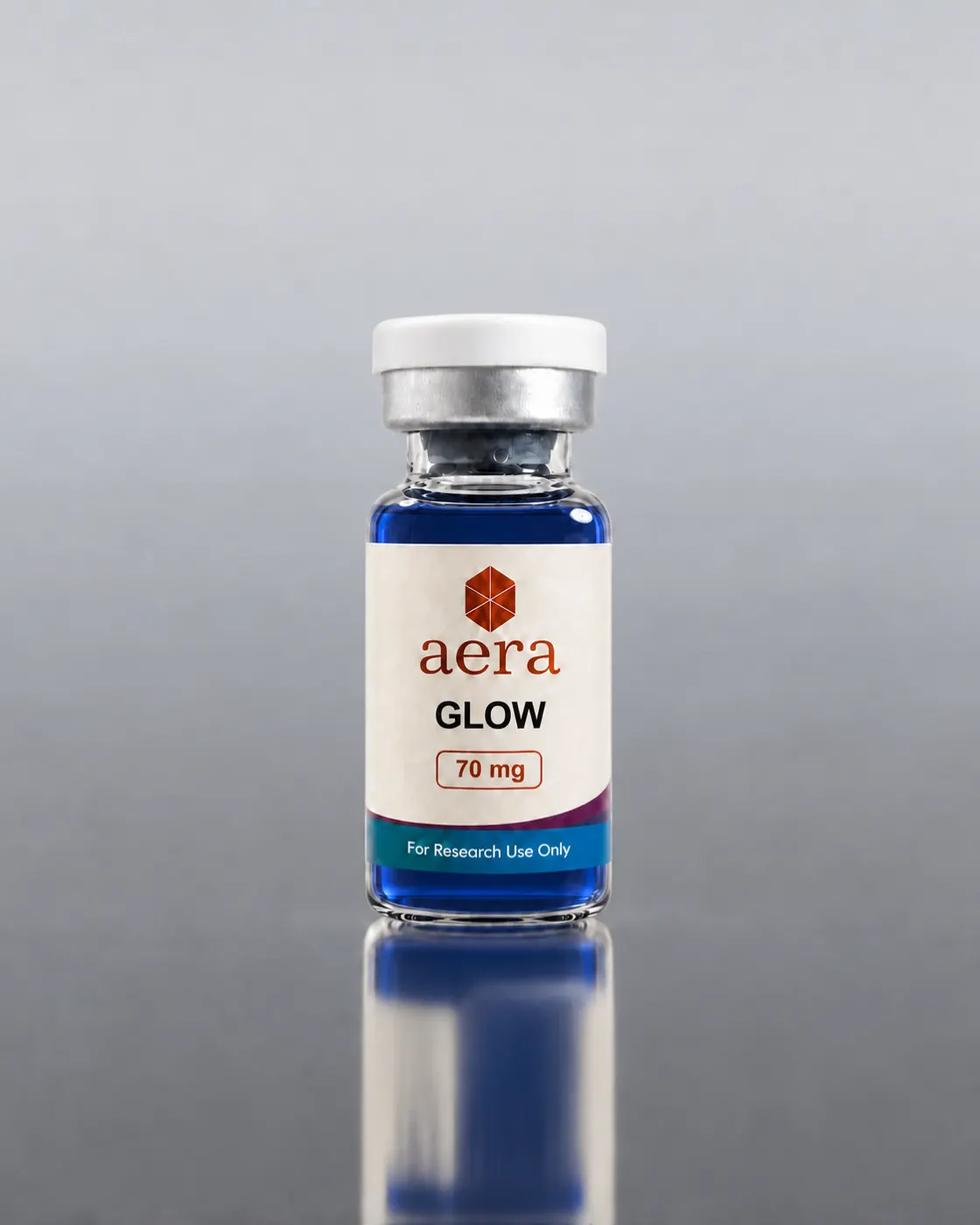 Glow Blend70mgFrom ฿2,390$72 USD
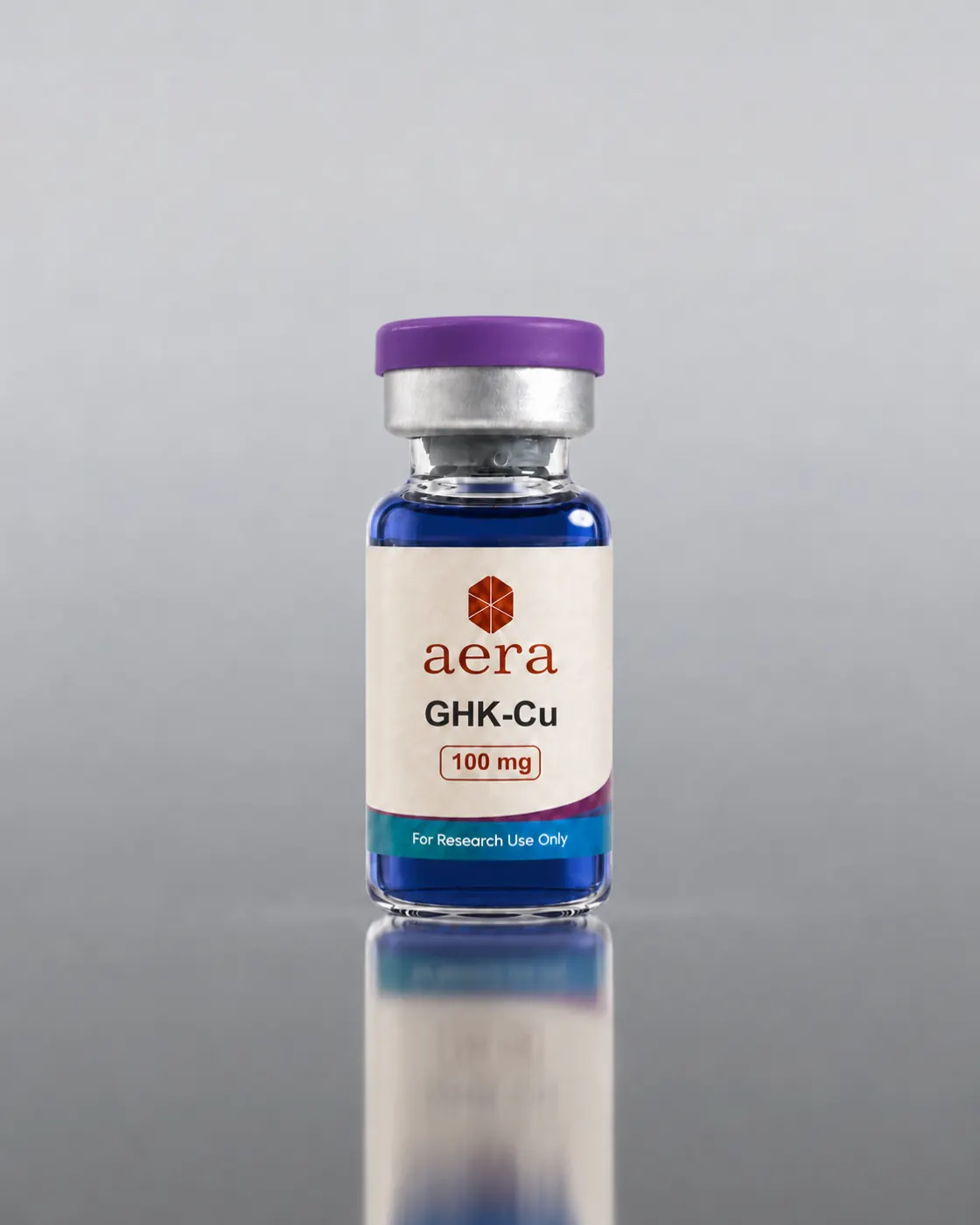 GHK-Cu100mgFrom ฿1,090$33 USD
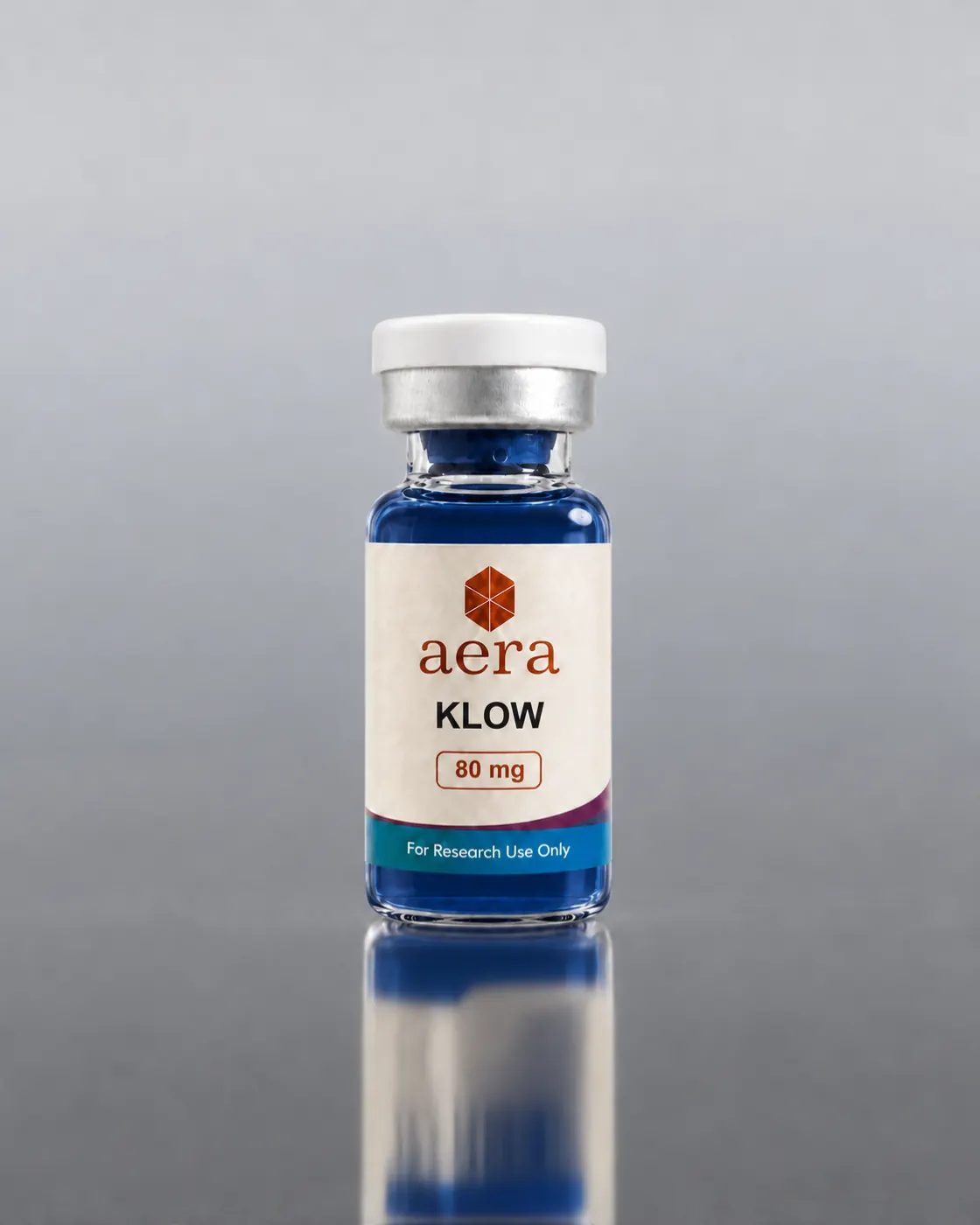 Klow Blend80mgFrom ฿3,390$102 USD
 Bacteriostatic Water10mLFrom ฿300$9 USD
For research use only. Not for human or veterinary use. First Amino stocks Aera. Third-party tested.
References
Sources
- Pickart L, Margolina A. Regenerative and protective actions of the GHK-Cu peptide in the light of the new gene data. Int J Mol Sci 2018;19(7):1987. doi.org/10.3390/ijms19071987
- Goldstein AL, Hannappel E, Sosne G, Kleinman HK. Thymosin beta4: a multi-functional regenerative peptide. Basic properties and clinical applications. Expert Opin Biol Ther 2012;12(1):37-51. doi.org/10.1517/14712598.2012.634793
- Gwyer D, Wragg NM, Wilson SL. Gastric pentadecapeptide body protection compound BPC 157 and its role in accelerating musculoskeletal soft tissue healing. Cell Tissue Res 2019;377:153-159. doi.org/10.1007/s00441-019-03016-8
- World Anti-Doping Agency: the Prohibited List (S0 non-approved substances; S2 peptide hormones, growth factors, related substances and mimetics). wada-ama.org/en/prohibited-list
This guide is general information about research materials. It is not medical or legal advice.